
Have you ever experienced sudden tooth pain during a flight, especially during takeoff or landing?
While many travelers blame cold cabin air, stress, or fatigue for the discomfort, recurring tooth pain during air travel may actually indicate an underlying dental problem.
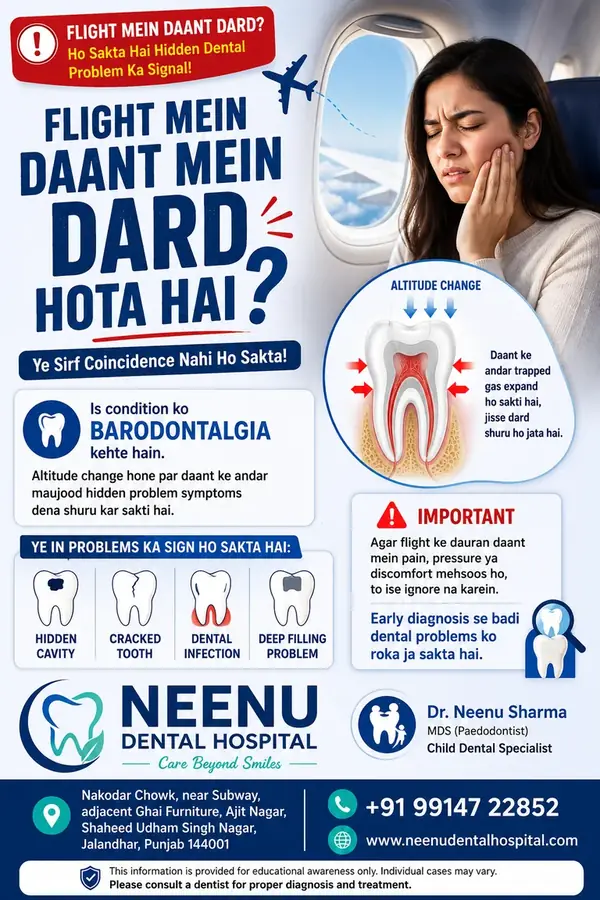
This condition is known as Barodontalgia, a type of dental pain caused by changes in atmospheric pressure.
Pilots, cabin crew members, frequent flyers, and even scuba divers may experience this condition. In many cases, the affected tooth feels completely normal on the ground and becomes painful only when altitude changes occur.
Although Barodontalgia itself is not a disease, it can be an important warning sign of hidden dental issues such as cavities, cracked teeth, leaking fillings, or dental infections.
What Is Barodontalgia?
Barodontalgia refers to dental pain caused by changes in atmospheric pressure. It is most commonly experienced during flights but can also affect scuba divers and mountain climbers.
Interestingly, many people do not experience any symptoms while on the ground. The pain may occur only when the aircraft changes altitude during takeoff or landing.
In most cases, Barodontalgia is not a disease itself. Instead, it is often a warning sign of an underlying dental problem.
Why Does Tooth Pain Occur During Flights?
Think about a sealed packet of chips during a flight. As the aircraft climbs higher, the packet expands because of changing air pressure.
A similar effect can occur inside an unhealthy tooth.
If a tooth has a hidden cavity, crack, old filling, or infection, tiny pockets of air may become trapped inside. During altitude changes, these air pockets can create pressure on the sensitive nerve tissues within the tooth, leading to pain and discomfort.
Common Causes of Flight-Related Tooth Pain
Hidden Cavities
A cavity may be present deep inside the tooth without causing obvious symptoms. Changes in air pressure can make the problem noticeable during a flight.
Cracked Teeth
Small cracks in the tooth enamel may not be visible or painful during daily activities. However, pressure changes can trigger discomfort.
Old or Leaking Fillings
Damaged or poorly sealed fillings may allow air to enter microscopic spaces inside the tooth, increasing sensitivity during flights.
Dental Infections
Inflammation or infection affecting the tooth nerve can become more painful when cabin pressure changes.
Sinus Problems
The roots of the upper back teeth are located close to the sinus cavities. Pressure changes affecting the sinuses may sometimes feel like tooth pain.
Symptoms of Barodontalgia
Sharp pain during takeoff or landing
- Sharp pain during takeoff or landing 3
- A feeling of pressure in one particular tooth
- Increased sensitivity to cold air inside the aircraft
- Pain that gradually improves after the flight
- Discomfort while chewing food after travel
- Repeated episodes of tooth pain during future flights
Should You Ignore Flight-Related Tooth Pain?
No.
Even if the pain disappears after landing, the underlying dental problem usually remains. A small cavity, crack, or infection can gradually worsen over time if left untreated.
Early diagnosis can help prevent more complex dental treatment in the future.
How Is Barodontalgia Diagnosed?
Your dentist may recommend a comprehensive dental examination to identify the cause of the problem.
This may include:Digital dental X-rays
- Digital dental X-rays
- Examination of fillings and crowns
- Assessment for hidden cracks
- Evaluation of dental decay and infection
Treatment Options
Dental Fillings
Used to treat cavities and restore damaged teeth.
Replacement of Old Fillings
Leaking or damaged fillings may need replacement to restore a proper seal.
Root Canal Treatment
If the tooth nerve is infected or severely inflamed, root canal treatment may be recommended.
Dental Crowns
Cracked or weakened teeth may require protection with a dental crown.
Tips for Frequent Flyers
- Schedule regular dental check-ups
- Do not ignore tooth sensitivity
- Treat cavities early
- Replace damaged fillings when advised
- Maintain good oral hygiene
- Visit a dentist before long trips if needed
Frequently Asked Questions
Is tooth pain during flights normal?
No. Recurring tooth pain during flights often indicates an underlying dental issue.
Can a hidden cavity cause pain only during flights?
Yes. Some cavities may remain symptom-free on the ground but become painful when air pressure changes.
Can Barodontalgia go away on its own?
The pain may disappear after landing, but the underlying dental problem usually remains and should be evaluated by a dentist.
Conclusion
Tooth pain during flights should never be ignored.
It may be your body’s way of warning you about a hidden cavity, cracked tooth, failing filling, or dental infection.
If you experience pain, pressure, or discomfort while flying, a professional dental examination can help identify the cause and prevent future complications.
Visit Neenu Dental Hospital
📍 Near Subway, Nakodar Chowk, Adjacent Ghai Furniture, Jalandhar, Punjab 144001
📞 Call/WhatsApp: +91 99147 22852
Book your dental check-up today and travel with confidence.